The Beet is alive!

>> Wednesday, November 18, 2009


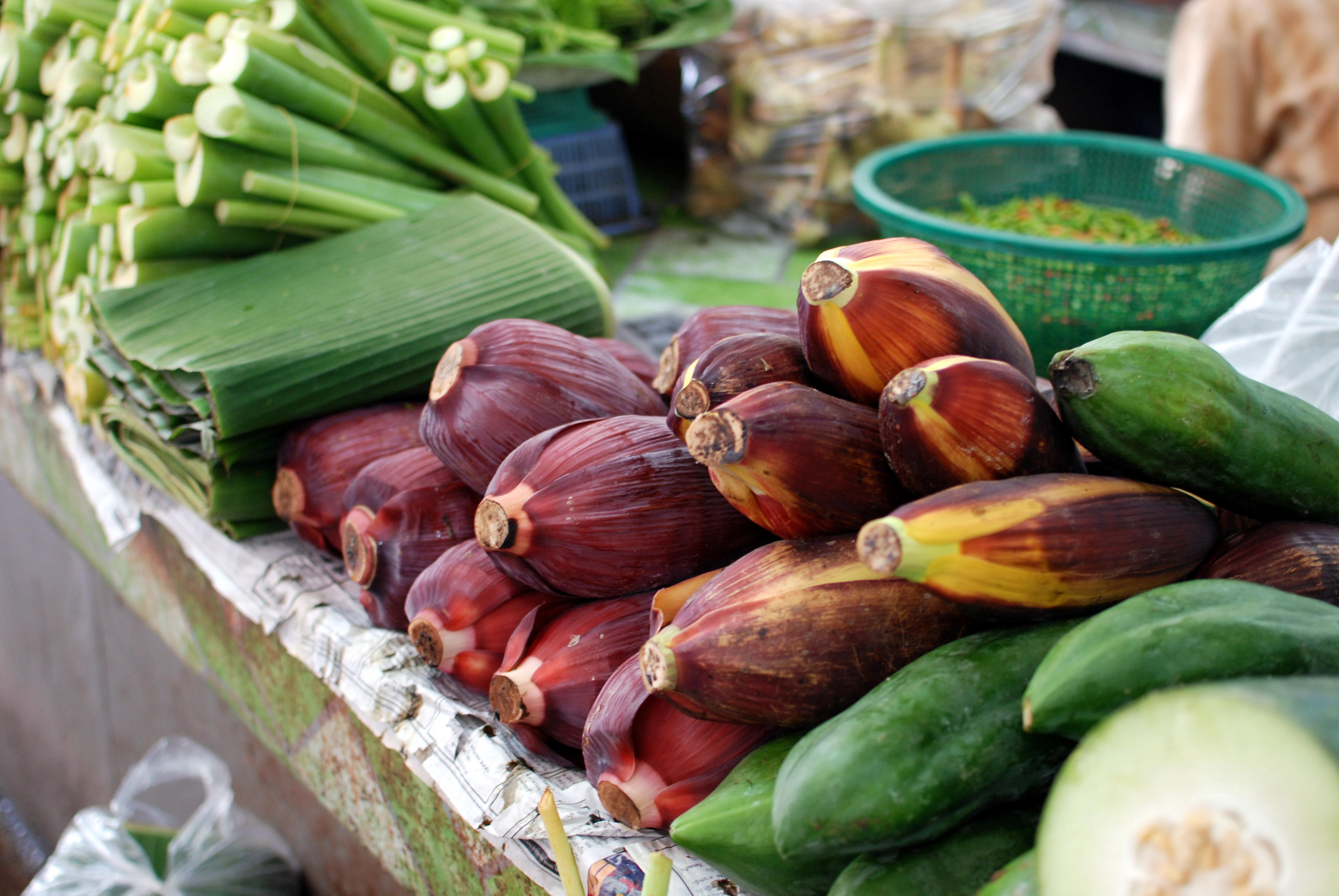
My wife being Ukrainian, we get our share of beets in our family's meal options, which is just fine with me. There was a time when I had a little too much borscht, because the typical method of cooking this soup is in a container meant for a large crowd - or a whole week, for our size of family. It's delicious, but eating it daily can get to you. But I've gotten over that, or else we're not having it as often, and I'm raving about it again.

I would say that the beet is not an overly popular vegetable in America - at least not beyond the Eastern European immigrant families! This is too bad, because it's a long-lasting root vegetable with many significant health benefits.

A beet is packed with calcium, phosphorus, iron, sodium, potassium, and vitamins A, C, and a little B-complex. They also have betaines, which give beets their red color, and sulphur. It has been found in numerous studies all over the world that fruits, vegetables, and some spices all containing sulphur have a proven track record for preventing as well as treating tumors - that is, cancer.

At our house we eat it in a few ways, frequently. As I mentioned, borscht is a staple recipe for beets and it is well-deserved. Every cook makes it slightly different, pretty much every time it's made, and with a dollop of sour cream (go for the REAL stuff) it is simple and elegant at the same time.

I also highly recommend juicing a raw beet along with a few carrots. If you have a centrifugal juicer or better yet a Vita-mix, this is an easy way to get the maximum benefit of all the beet's nutrients. You can also try adding in a clove of garlic, romaine lettuce, or other greens for various flavor kicks.

Another way that my wife often prepares beets is in her own beet salad. I've never seen a recipe like this, and it's really good.  It's sweet, earthy, and just plain good-for-you.

Olena's Beet Salad


  • 3 medium red beets, without stems or root tips
  • Mayonnaise* to taste, about 3 tbsp
  • A handful of walnuts or pecans
  • A handful of prunes
  • 3 cloves of garlic


Keep in mind that these amounts can be approximated and you'll still wind up with pretty much the same results - so don't worry about how much of each you really have.

Either roast or boil the beets until they're soft. At least an hour. Let them cool, and then peel and shred them using a food processor.

Chop the walnuts and prunes as finely as you wish, mince the garlic, and dump everything into a bowl for stirring together.  Let the salad cool in the refridgetator and then serve!

As a tasty variation, instead of mixing everything together in a bowl, throw all of the ingredients minus half the nuts and prunes into a Vita-mix and blend until somewhat smooth. Pour it out, and then mix in the remaining nuts and prunes. This gives the whole salad a somewhat creamy, yet crunchy texture.

*When it comes to mayonnaise - make your own! It's really easy and if you can't find a recipe elsewhere online, there will be one available on Psychic Lunch for you, soon. Making your own will let you rest assured that you're not eating any rancid oils or preservatives, which almost all store-bought mayonnaise has.


For more information, read John Heinerman's Encyclopedia of Healing Juices.

This post is part of Real Food Wednesday - go read more real food stories!

Read more...

Raw milk makes sense

>> Tuesday, November 17, 2009


There was much discussion about raw milk at the recent Weston A Price Foundation conference held near Chicago, Illinois. As this writer was not able to witness all of the lectures personally, this will be a layman's perspective on why raw milk is the better, healthier choice over pasteurized milk. This will be, essentially, a question of common sense and of history.

It is probably ingrained within each of us not only to strive for personal and cultural betterment, but also the assumption of it as well. This is a grave mistake that is nearly always overlooked until it is too late, whereupon something catastrophic occurs to remind us of our humanity. We as humans simply assume that progress is good in and of itself, and that assumption could not have been more wrong than in the application of pasteurization to the process of milk production.

Before pasteurization, all milk was raw or fermented. People have consumed milk since Biblical times or earlier. It is plain, common sense that had raw milk actually ever been as dangerous as we typically assume now, we would not be alive today. But it wasn't and isn't dangerous - not until mankind decided, due to rising urban pressures and industrialization, to try to streamline the process. The poor sanitary conditions of the cows and workers used in this streamlining process only contributed to the deaths of many people - especially infants over the coming years of industrialization. The only solution, then, for massive dairies to provide milk free from contamination was to pasteurize it, thus killing all the good parts along with the bad.


Around the time of World War II there arose a media-driven attack on local, farm-raised milk. Who knows? Perhaps the owners of such magazines as Ladies Home Journal, The Progressive, or Reader's Digest were friends with major mainstream dairy producers and were, God forbid, financially motivated to denounce opposition to their producer friends. However it happened, the smear campaign against milk successfully frightened the people into believing that "raw milk can kill you".  Suddenly, thousands upon thousands of years of history were forgotten with the wave of a dollar.

Decades passed then, with the proponents of industrial dairies having apparently "won" the battle of the cow. But truth never goes away and is always remembered and practiced by a very few. Today, thanks to unavoidable news such as E.Coli infected, mass-produced beef, or the more recent swine flu, the public slowly begins to awaken, sleepy-eyed and stretching, to the abominable state of industrial agriculture. People are beginning to talk to their neighbors who raise cattle and drink their raw milk - and learning that nothing harmful is happening to them! Isn't it amazing? Then those people get online and share it with more friends, and the word spreads.

The cow is considered wealth in many countries, and has been considered wealth in almost all countries in the past. People are finally realizing once again that milk is life, and doesn't need to be pasteurized killed.


Resources:
  • http://www.raw-milk-facts.com/milk_history.html
  • http://en.wikipedia.org/wiki/Milk#History
  • http://greenlivingjournal.com/page.php?p=1025
  • http://www.nytimes.com/2009/11/17/business/global/17iht-rbofmilk.html

Read more...

Who is Manfred Kroger?

>> Monday, November 16, 2009


While recently investigating milk history for an article, I came across this rebuttal to the Weston A. Price foundation's claim that reduced-fat milk initiates the process of heart disease.

In Manfred's rebuttal he claims to quote opposing facts, but his facts range from agreeing to the production method of powdered milk to simply stating that he doesn't know of any contrary evidence.

He claims that the cholesterol amount in skim milk powder would be insignificant. I am not an expert on milk, so that certainly could be true. However, this does not address two important facts. There still will be SOME oxidized cholesterol in the powdered milk, and the amount of this you want to consume is NONE. Also, adding oxidized milk (i.e. powdered) to non-oxidized milk will soon contaminate all the milk.

But rather than debating his so-called facts, I think the more important question would be to ask who he is, and why he is interested in defending industrial milk production.

He is a German-born man and he gradutated from a professional dairy trade school later attaining a PhD, MS, and BS in dairy science.

He has been involved in dairy processes his entire life, but this time would also have been during the already-established industrial-style dairy production. Thus, Mr. Kroger would most likely have been taught and trained in typical manner. He has also, then, held numerous professorships in the realms of dairy science. This all could be either for or against his case.

It gets more interesting when you look at his professional memberships, positions, and awards.

He has spent decades of his life belonging to organizations intent on promoting industrialization and homogenization of agricultural (dairy) practices. These organizations, among other things, do not believe that farms produce food. Their concern is for the industrial commodities that farms unite to create resources for. These are not the type of organizations that would ever have any intention on promoting small, individual farms OR the small-scale production of certified milk.

He is a current editorial advisor for Prevention magazine, a publication known for its heavy promotion of mainstream foods, production methods, and pharmaceuticals.

He is a board member of numerous dairy science boards and journals. He is advisor to multiple foundations and associations of milk producers and dealers.

It is immediately clear that Manfred Kroger, PhD, has made a lifetime of promoting modern dairy practices and is financially interested in maintaining these practices.

Follow the money.


in reference to: Silly Statements about Skim Milk (view on Google Sidewiki)


Read more...

Not Enough of the Wise Traditions Conference

>> Sunday, November 15, 2009

Life returns to the usual schedule now, as we've just returned home from our dash over to the Chicago area to attend the Weston A. Price Wise Traditions 2009 conference. My wife and I attended the Saturday seminars when we realized we had a chance to go. It's not always easy to leap at an opportunity like this, but we made it work, and it was worth it.

We attended the plenary session all day on Saturday, which covered the topics of raw milk, cod liver oil, and fertility foods, as well as general information about what is and is not a healthy food. Having taken some notes on these, I'll review what I learned in the coming days, but let me say for now that the conference was worth attending. It's encouraging to be around people who understand and embrace real food. It is also relieving to be able to eat what foods are offered or available (lunch was amazing) and be confident that there is no hidden trans fat, sugar, or other disease-causing agent.

There is so much more to learn. There is so much more to share. I am thankful and excited to be living in a time like this, where we can finally know what we're eating. While I understand that some of the tweeple I've talked with were also in attendance, and feel that it would have been nice to put real faces to the names, my only real regret from this weekend was that we couldn't attend the entire conference.

Bring on the healing!

Read more...

Guiding you toward raw and organic food with Chocolate Crunch Salad

>> Tuesday, November 10, 2009


When food is cooked above 119 degrees Fahrenheit (48 celsius), all enzymes in the food are killed. This makes it more difficult for your body to digest whatever it is you're eating, and you lose out on some of the amazing, life-giving nutrients that nature has made available for you.

Your body can begin to feel overworked and stressed based on the kinds of food that you put into it, so choose that which is good for you. You have the same opportunity every single day to choose what kind of fuel to run your body on. Cooked and/or processed foods are more equal to fillers or additives in gasoline than they are to actual fuel itself, but if you choose a mostly-raw diet, you're filling up on premium.

Some of the difficulties with healthy eating are cost and convenience. Indeed, these are the direct factors that guide people to choose convenient, fast- or processed- food in the first place? Why spend a half hour preparing breakfast in the morning when you can pick up a quick bite for a couple bucks on the way?  Well, as most of the diligent students of raw and/or organic foods will be able to tell you, any cost you save now by eating cheaply are simply deferred until you get older. Those payments even come back with interest due in the form of surgeries and expensive drugs.

There are hidden bonuses for choosing healthy options now as well - you will probably find by eating raw and organic foods that you have more energy throughout the day. Your skin will look and feel younger, getting to sleep will probably be easier, and you even may have natural weight loss by making the switch.

You should make the effort now, today, without waiting - and as you try, be sure to take every available shortcut that isn't a cheat, so that it's easier for your body to break into these new habits. Once you've reached the mecca of true healthy food, you will be surprised and proud to be able to announce your freedom from things like sugary pop and fried foods.

To help you along your way, here is an adaptation of a raw recipe for chocolate salad from Freedom's Raw Recipes. It's been changed so that it's easier to make, having more common ingredients, and is a wonderful recipe that combines a rich, tropical essence with a natural crunch.  It's natural, raw, and combines sweet with bitter in a way that shouldn't be possible. However not only is this possible, it's delicious.

Chocolate Crunch Salad

Ingredients
  • 5 bananas
  • 5 hearts celery
  • 2 tablespoons organic cocoa powder
  • 2 medjool dates
  • 1/2 cup almond milk 1
  • 1 1/2 teaspoons peanut butter 2
Directions
  1. To create the salad itself, slice the bananas and celery and combine in a bowl.
  2. Combine the remaining ingredients in a blender at high speed until smooth and pour over salad in individual portions, on plates.

1  You could substitute any milk of your choice, or as the original recipe calls for, orange juice
2  Peanut butter is the common choice, but coconut cream concentrate is recommended. It's organic and has lauric acid your body needs that the peanut butter does not. You can order this online from Tropical Traditions; please refer Psychic Lunch if you do!  #3408055 If you're a first-time customer and you use this referral code, you'll also get a free Virgin Coconut Oil book that has 85+ recipes :)


This post is part of Real Food Wednesday, this week hosted by Kelly the Kitchen Kop.

Read more...

Hospital Nutrition and Cleanliness

>> Monday, November 9, 2009


Hospital Nutrition - an oxymoron?

Our family has not had much experience with hospitals, for which we count our blessings. We've luckily never gotten in any accident that required surgery and we've always followed fairly to very good guidelines when it comes to food and exercise. Fear, I suppose, drove us to have our children at the hospital. That "what if" question really got a hold of us. I hear tell now that the homebirth trend is growing, especially with experienced midwives. But the point of this story is that we were there in the hospital and were able to witness firsthand the healthiness, or lack thereof, of the food served to patients in the hospital.

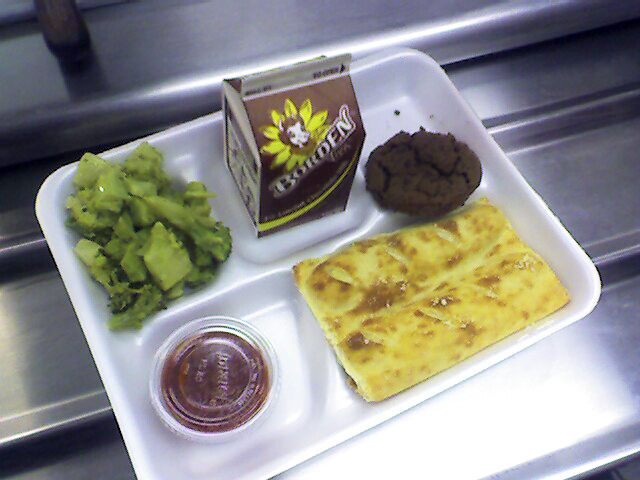
This was a while ago now since our youngest was two, but it sticks in my memory as if it were yesterday. As I think about what they served us (for they did bring enough for the husband) I have terrible flashbacks to lunchtime at school. The processing and overcooking at hospitals is bad enough that it seemed they were shouting out that they knew nothing about nutrients and organic, natural foods.  I recall there being chicken for some of the main courses, but odds are very, very high that they were as processed as chicken breasts can get. That was probably the healthiest of the food selection. There were green beans that were either canned or cooked so much there could not have been any valuable nutrients left. There were apple sauce- and pudding-cups. Skim milk and coffee. Overall, you may as well have been getting prison food - except that prisoners probably eat healthier than that.

Thankfully there was an organic deli and grocery a couple of blocks away from the hospital, so that I could actually go buy some real food. When I returned I met with the nutritionist at the hospital to complain, but it turns out that regardless of her knowledge, she was actually unable to change much in what they served to patients; the decisions were based on contracts and thus mostly out of her hands.  It all comes back to that, doesn't it? It's all driven by how much profit can be made for the business, regardless of the end-user's best interest.

A Hospital Lacking in Cleanliness


I also recently talked to my cousin (whom I will call Alice for this article) whose husband had broken his leg and therefore had to go in. She was appalled by the lack of cleanliness she found there, and shocked beyond all human belief at the lack of care on the part of the nurses in the ER. They dropped several syringes, the tourniquet, and various pain medications - and then picked them up and proceeded to apply them to her husband. They ignored required disinfectant prep work until reminded of it, whereupon they did it gruffly and quickly.

Medications were not given on time and her husband was in constant pain as it turned out that he was having an allergic reaction to what they were giving him. The doctor and nurse were aware of this reaction, but decided to go ahead with their planned medication rather than attempt any different ones. Only upon Alice's demanding did the nurse call to change the treatment.

The doctor never came to see her husband before he was released, and Alice found, upon asking about it, that the nurse rudely - to the point of being nasty about it - stated that the doctor had indeed been in twice to see him. Alice's husband hadn't slept a wink the whole time he was there, and would have remembered the doctor's visit.

I'm sure there must be good hospital experiences that people have had out there, and in fact I'd hope there are. But from what I've seen, when a person goes to a hospital, they become a number, placed in a soulless room, fed under-nourishing food, and sent home with a bill that's too embarrassingly large to even think about.  This is not the description of a place where one feels safe and well, and are sent home with drugs and stress-laden bills.

A friend of mine says that it depends on the hospital, and the doctors and nurses within it. I can understand that like life you're going to find a lot of good and a lot of bad together in a lot of places. Naturally, stories related to hospital experiences are going to be filled with hope, frustration, caring, anger, love, sadness, and a whole host of other emotions.  I write about this topic knowing I have little real-world direct knowledge to base a judgement on, but my experiences all lead me to distrust practitioners who have been taught that their way is the only way to do something, who refuse to open their minds to learn new things, or display a learned ignorance toward things that to me are common sense.

Read more...

Oregano oil afterthought: keeping kids from getting sick

>> Friday, November 6, 2009


I'm more impressed with oregano oil every time I learn about it, and each time I use it. It gives a kick that feels as strong as chewing raw garlic does. I found a site which I'd bookmarked while researching oregano oil, Herbal Remedies Info, and the comment at the top of the page about treating children with it - and this gives me pause for thought.

How do you keep your children healthy when some of the best natural remedies can be a little strong for even an adult who is ready for it? The author's solution for treating them with oregano oil is to place a few drops in a gel capsule first, so they can swallow it whole. This would work of course, providing the children don't object to swallowing pills. I can see other downsides to it; you'll have to always have some gelcaps on hand, and there are some who object to using gelcaps.

It has been said before that you should never put something on your skin that you wouldn't put in your mouth, because your body absorbs nutrients and chemicals through your skin almost as easily as eating it.  Using this bit of knowledge you can boost your kids' immune system while they sleep by applying the proper oil mixture to their feet and other sensitive skin areas. Naturally, the same goes for any other healthy oil you might want to slip into their system unnoticed.

Try to keep them away from situations in which they'll have a higher chance of getting sick. Indoor playgrounds are a prime example, especially during the colder months. These things are not always cleaned as often as they should be - how can they be? The pipes and platforms can't be sterilized as the children play on them, and that's the time when germs are getting exchanged. Fast food restaurants that still have playgrounds are especially noted for their toys' uncleanliness.

Speaking of fast food restaurants, that's another thing to keep your children away from - and of course, yourself as well. They're cheap in every sense of the word; plenty of low-cost, unhealthy food and plenty of customers to pass on more germs. While you might think yourself frugal for saving a buck and some time by eating out, you'll wind up paying for it in the end.  You'll get sick now from germs, or sick later from a lifetime of non-nutritious food.

Be smart, and pro-active. Running to clean their hands after they've already wiped their noses with hands that just touched an aquarium glass is probably not the way of keeping them safe. Encourage them to eat the right foods, and guide them by example.

Read more...

Keep Colds and Flu away with Oregano Oil

>> Thursday, November 5, 2009


Overall, oregano oil was particularly powerful -- it consistently inhibited the growth of all three foodborne-illness causing germs (E. coli, Salmonella and Listeria) tested. - Natural News

Oil of oregano? The spice that makes spaghetti tasty also makes you healthy? Bring on the pasta!

Okay, it's not really like that. It is the same family of plants, but the healthy oil extracted from oregano comes from a different kind than that which is used for cooking. The kind extracted from the origanum vulgare contains carvacrol, and has all kinds of good-health-supporting properties which is why it can keep you healthy by strengthening your immune system during cold and flu season.

This is one of those things that you should start or increase when or if you feel a cold coming on. This oil is good at killing the bugs that cause colds, sore throats, and so on. You don't need to be in the habit of taking it daily; it may make iron more difficult for your body to absorb. Alternatively, if you feel the need to be covered at all times, a drop or two each day under the tongue coupled with some good iron supplements will keep your defenses up.

There are other reasons to have oregano oil as part of your diet besides fighting off colds.  It's good for digestion, flexibility, skin, and more. Just remember to use very small doses - no more than three drops at a time, probably no more than three drops per day. To take it internally either place the drops underneath your tongue or mix it with a glass of juice.  The latter method is probably easier for most people because the pure oil - even a couple of drops - can be spicy enough to make you cough.  If you apply it to your skin, be sure to  thoroughly dilute it with olive or coconut oil.

The keys to your health are all around you. You just have to clear away the man-made junk to find it. Oil of oregano is very easy to use. What's stopping you from being healthy?

Here is my Amazon Affiliate link for the oregano oil I actually use: N.American Herb Spice - Oreganol (Oil Of Oregano).


resources:

Read more...

About Psychic Lunch

Psychic Lunch was founded in 2009 by a nerd and father who wants people to be healthy. The information on this site is researched, but should be considered opinion; that is, you should always do your own research and come to your own conclusions about what is and what is not healthy. Products endorsed on this site are actually believed in and used by the author.

Facebook

Truly Recommended

  © Blogger template Simple n' Sweet by Ourblogtemplates.com 2009

Back to TOP